• One could almost say that, wherever nobody is talking about power, that is where it unquestionably exists, at once secure and great in its unquestionability. Wherever power is the subject of discussion, that is the start of its decline.’

    Beck, Power in the Global Age, p. 57.

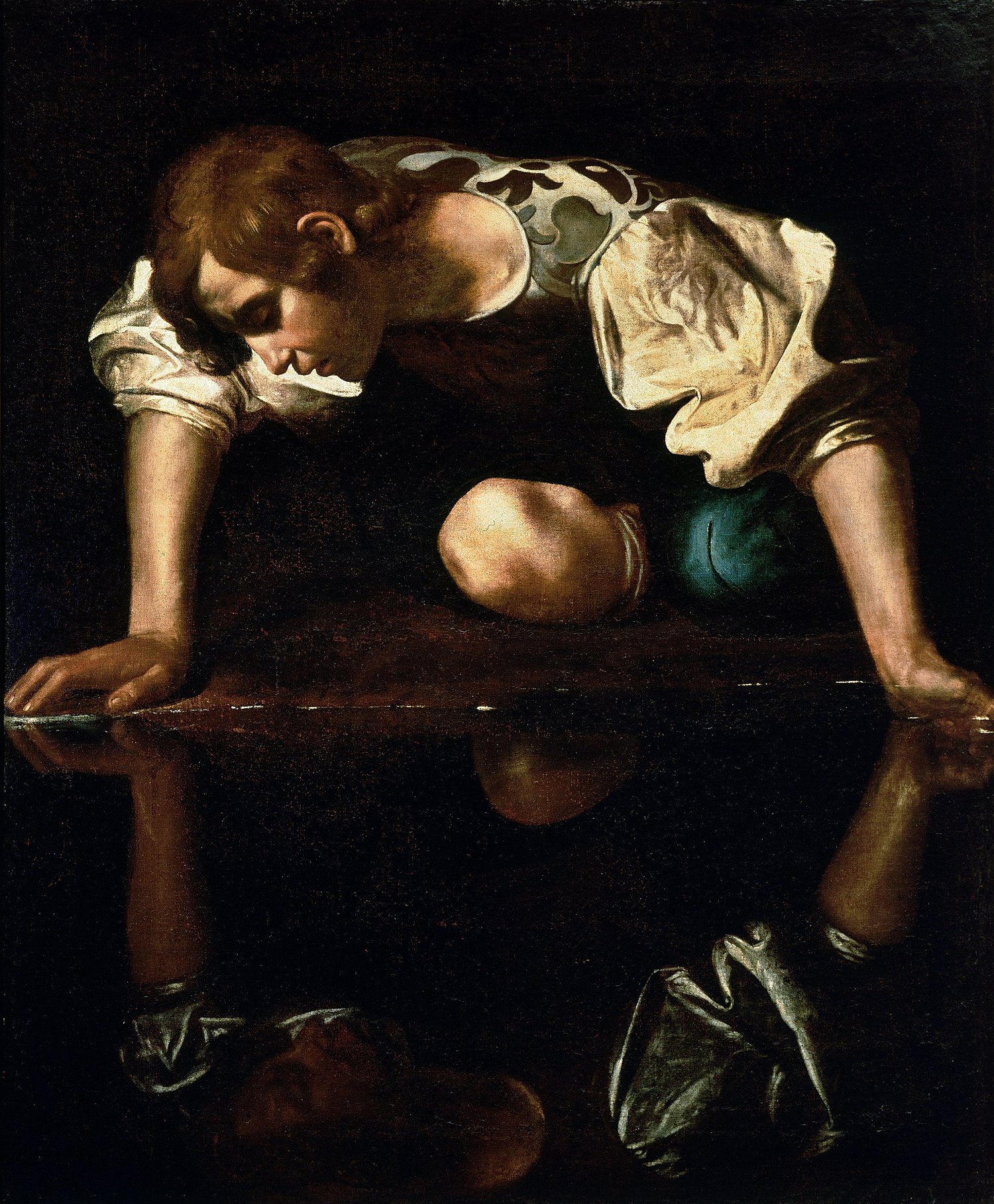
    To understand power, Byung-Chul Han gives us the example of the cat and mouse. If you have ever had the unfortunate chance of witnessing a cat eat a mouse, you’ve then witnessed how power operates. I am not referring to the grotesque scene wherein the cat gnaws on the mouse with its teeth. The bite is raw violence. Rather, I am referring to what happens before the mouse’s ultimate demise: the cat allows the mouse to play; it gives it a false sense of ‘space’ i.e. freedom. That is not to say power is inherently evil. It operates everywhere. Take, for example, the young quarantined child who can no longer stand the constraints of the home. Theparent will allow him a new space, the backyard, and the child roams thinking it is now free. Here, again, power operates as when the parent warns, “Stay where I can see you!” The reason I am using these metaphors is because, as Muslims, we need to understand the nature of power before we can strategize on how to gain and employ it. Otherwise, just like the mouse or even the child, we are doomed to live under the illusion that we are free, more so because the powers that we want to resist are most powerful when they are invisible and silent. 
  • The event, which annuls what has held until now – the standing order – proves just as incalculable and abrupt as a natural disaster or act of God. It defies all calculation and prediction. When it occurs, an entirely new state of affairs begins. The event brings into play an outside, which breaks the subject open and wrests it from subjection. Events represent breaks and discontinuities; they open up new spaces for action.

    Byung-Chul Han

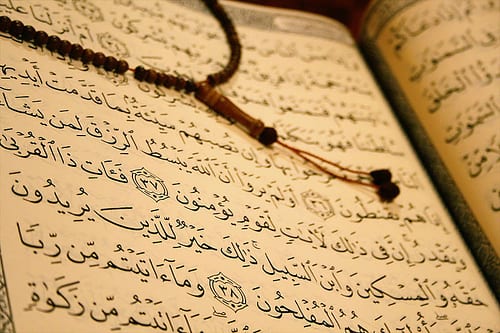
    To inaugurate a rupture with the prevailing hegemonic modes-of-being, the Qur’ān is in itself is revealed as a rupture. It is an event. It is miraculous, not only in the sense that it ruptures natural laws but also in its rupture with the existing regimes of knowledge (epistemologies); i.e. jāhiliyyah, oppressive orders (politico-economic and social systems) i.e., the tāghūt; and their narrow metaphysical horizons i.e. dunyā, and as such it breaches the narrow horizons that constitute the prevailing order which ostensibly presents itself as closed and divine. That is to say, the Qur’ān is revealed from exteriority (which means that which originates outside of the hegemonic regimes). The critical point here is that this new consciousness, having been revealed from exteriority, amounted to nothing short of a new existential orientation: a new way of being-in-the-world in the sense that the Qur’ān not only addresses the why of existence but also the how.

    The Qur’ān is an event in that it is revealed (tanzīl) and is also named as al-Furqān (3:4) which means the decisive criterion that affirms the distinction between truth and falsehood and has also been translated as the “Decisive
    Authority” in that it negates existing epistemic and political modes of authority (false gods) and inaugurates a new authority grounded solely in divine revelation that is interpreted, not by the epistemic or political
    sovereignty of a state but by a dynamic community through ijtihād and shura. It is a revelation of God from Himself about Himself as opposed to the domesticated images of God that prevail and legitimize hegemonic and oppressive
    orders.

  • وَمَا الْحَيَاةُ الدُّنْيَا إِلَّا مَتَاعُ الْغُرُورِ

    “…The present world is only an illusory pleasure…”

    Guy Debord speaks of the commodity as having colonized social life, leaving man not with an authentic social life but one beset with illusory images and false representations. It is, through commodification, the “colonization of social life.” I want to suggest that we push this critique further, drawing on our Qur’ān. The dunyā is not merely the space of spectacles. It is, in itself, the meta-spectacle. It is the illusion of all illusions. The dunyā refers to that which is lowly drawn near to one’s sight and consciousness. It is described in the Qur’ān. It is a spectacle because it lacks any grounds and is ever-ephemeral. The Qur’ān encapsulates this groundlessness with the term bāṭil, which denotes a lack, or what is ephemeral in its duration in contradistinction to the stability of haqq, or truth. Bāṭil is characterized by hāwa, which connotates falling or emptiness as in the case of the noun hāwiyyah, which literally means an abyss. As a space of diversion, the dunyā is the space of alienation, inhibiting basīrah (insight) only to sublimate basar (sight). The Qur’ān disrupts the spectacle, it is revealed as a breaching of the spectacles narrow representations. It is also a breach in that it reveals to us the reality of this world: that the totality of all existents are signs of the grandeur of God. The Qur’ān allows our consciousness to move from the spectacle and meta-spectacle to the world as âlam (lit. that which is a sign).

  • The Prophet (ﷺ) said: The people will soon summon one another to attack you as people when eating invite others to share their dish. Someone asked: Will that be because of our small numbers at that time? He replied: No, you will be numerous at that time: but you will be scum like that carried down by a torrent, and Allah will take fear of you from the breasts of your enemy and last enervation into your hearts. Someone asked: What is wahn (enervation). Messenger of Allah (ﷺ): He replied: Love of the world and dislike of death.

    Scum is a layer of froth or dirt on the surface of water. Unlike solids, it lacks form. It is stagnant; it lacks movement of its own (“like that carried down by a torrent”). It does not act for itself but is carried by a torrent, and as such, it is acted upon. These are not accidental attributes but inhere in the very ontology of man who was created from both ‘mud‘ (hamin masnun) (15:28) that is stagnant and sedentary and the spirit that is active and is driven towards the sublime. Man is in a constant struggle between these two poles. Thus, love of this world represents a drive toward what is like that of mud; it is sedentary and stagnant.


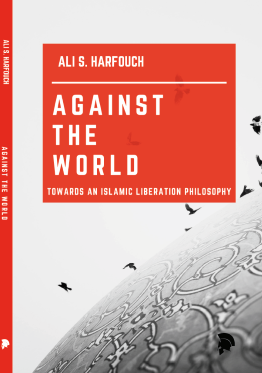
  • Against the World: Towards an Islamic Liberation Philosophy

    In 2008, an ideologue of Pax Americana, Zbigniew Brzezinski, penned an op-ed warning the incumbent president of a “global political awakening.” Four years after Brzezinski prescient warning, the Arab world witnessed a wave of revolutions, toppling the long-standing dictators Ben Ali of Tunisia, Hosni Mubarak of Egypt, and Muammar al-Gaddafi of Libya. The Muslim world, following the Arab Spring, finds itself in the throes of a transition and is beset by an existential crisis. It stands before a pivotal moment in a world characterized by the triune idolatry of the self, capital, and the state. This book examines the contours of an Islamic critical consciousness and praxis, the fruits of which is the liberation of the Muslim world from the idolatrous global and neoliberal world order. The basis for this radical Islamic critical consciousness is rooted in tawḥīd, the divine unicity, and Oneness of God. The inauguration of a tawḥīd as a critical consciousness and radical praxis amounts to reclaiming our alterity as an ummah, created not in the image of the hegemonic state but in its own distinct image. Tawḥīd as a grounds for a critical consciousness and alterity, this book argues, amounts to a liberatory politics of spiritual self-affirmation through which the Muslim world can reclaim its liberatory vocation and chart a future beyond a world created in the image of the hegemonic state. Ultimately, the task at hand is two-fold, a tajdīd, a renewal of our understanding of tawḥīd and the inauguration of a second Islamic insurrection made possible only through a revolt against the world at large.

    Read Introduction

    Purchase (Inside United States)

    Purchase (Outside of the United States)

  • Seeing the World, Again

    In this essay I want to reflect on reflection. In our age, the primordial desire to reflect has been replaced with a wanton desire to consume; God has been replaced with an egotistical “I” whose raison d’être is consumption. The world is left bereft of the grandeur of God, animated only by the mana of money. How can we recover reflection in a world misenchanted by capitalism? Reflection, if it is true to its name, is always critical. It is critical, not in the nihilist sense, but in its capacity to negate meanings of a world bequeathed to us by capitalism and to create new meanings. To reflect is to reclaim what is interior to the self; that is, the self that exists independent of the structures of meaning projected by a hegemonic order. The Argentine-Mexican philosopher and theologian Enrique Dussel gives the example of a taxi driver. To the non-reflective self, the taxi driver is a mere extension of a vehicle, whose value is instrumental: to get us from point A to point B. The critical, reflective self recognizes the taxi driver not as an instrument in his own narrow world, but as an authentic “Other”—that is, someone with an existence independent from him.

    Read More

  • On Ḥakimiyyah: Sovereignty of God and Communal Authority

    Who is sovereign? This is not a purely speculative or theoretical question. It has concrete implications on questions of governance and state. It is, in an age of the fetishization of the state, a subversive question. In this article, I begin with an excursion into our present state of affairs, in relation to the fetishized modern state. I go on to explain the dimensions of what we call the political space in order to identify the origins of fetishization and tughyān (transgression) and introduce the concept of exteriority (that which originates beyond a hegemonic order, or state). I then identify two dimensions of tawḥīd, God’s creative will (irāda khalqiyya) and a more neglected dimension, God’s legislative will (irāda shar’iyya). I explore the ways in which these two dimensions of tawḥīd culminate in a liberatory philosophy and a radically new conception of politics. Finally, I explore the dimensions of God’s legislative will by examining the ways in which, contrary to the self-referential nature of the modern state, the Islamic polity is other-referential in that it is contingent onto (1) the absolute sovereignty of God and (2) the creative and dynamic authority of the community through the ijtihad and shura.

    Read More

  • What is the Task of Political Theology?

    For most practitioners, political theology is a vocation, a calling that illuminates our lived reality. It is, as Sheldon Wolin says of political theory, not only about the polity but for the polity. Political theology investigates the ways in which our theological concepts inform our collective existence and political experiences. As with Wolin’s vision of political theory, political theology is “not so much interested in political practices, or how they operate, but in their meaning.” The task of the political theologian is to unearth the “unthought” that informs our political, economic, and social practices which makes a metaphysical account of society not only inevitable but necessary.

    Read More

  • Inventing Generation M: The Umma and Neoliberalism

    The Muslim Umma is akin to a living organism; it is exposed to an environment and possesses its own genetic code. This genetic code represents the Umma’s field of possibilities––a series of unrealized choices capable of transforming the possible and potential into the real and actual.1 This field of possibilities, however, is delimited by power, or the selection of one possibility and its enforcement as a prescription to the exclusion and invisibilization of others. The result is the enforcement of a predetermined future and the subjection of the Umma to codes that dominate the present. As it stands, the Umma finds itself in a state of crisis and beset by the power of an invisible ideology, namely, neoliberalism.

    https://ummatics.org/political-theory/inventing-generation-m-the-umma-and-neoliberalism/
  • The Sacred Secular

    Postcolonial and decolonial paradigms are often seen as purely academic enterprises. But these paradigms in fact address concrete questions about how we can conceive of (and ultimately achieve) liberation from the throes of colonial modernity. Such projects are philosophically demanding: they require a critical self-examination of the ability of our narratives to adequately critique colonial modernity in the first place. One of the ways in which narratives of postcolonialism and decoloniality tend to fall short in this regard is in their failure to sufficiently engage questions of secularity or “the secular.” If postcolonial narratives are to succeed in critiquing colonial modernity and enacting the kinds of liberation they envision, they must interrogate the secular regimes of knowledge that legitimize their own theoretic projects. Such a critique necessitates reclaiming the place of the divine and transcendent in postcolonial and decolonial paradigms.

    Read More